Wardrobe Organisation Tips for Indian Homes — Small Closets, Big Solutions

Transform your cramped Indian closet into an organised, time-saving wardrobe with these practical tips and affordable hacks.
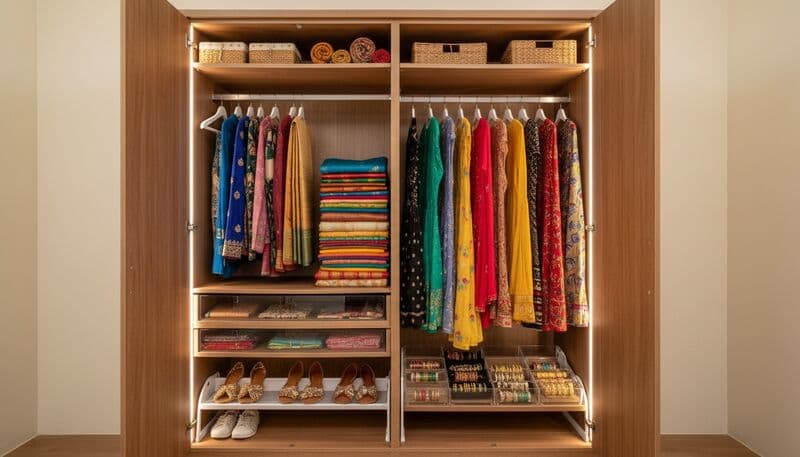
Let us be honest — most Indian wardrobes are a beautiful mess. Sarees folded in plastic bags from ten years ago, lehengas stuffed into the highest shelf because they are too heavy to move, that one kurta you wore to your cousin's wedding in 2019 that you will definitely wear again (you will not), and a monsoon jacket buried under a pile of dupattas.
The problem is not that you have too many clothes. The problem is that you cannot find what you have. You end up wearing the same 15 pieces on rotation while 60 percent of your wardrobe gathers dust, mothballs, and guilt.
This guide is built for real Indian homes — small closets, shared almirahs, no walk-in luxury. Every tip here works whether you have a single steel almirah or a full modular wardrobe.
The KonMari Method — Adapted for Indian Wardrobes
Marie Kondo's famous question — does it spark joy? — needs an Indian edit. Because in India, you do not just keep clothes for joy. You keep them for weddings that might happen, relatives who might visit, and that one saree your mother gave you that you cannot emotionally part with.
Instead of asking if it sparks joy, ask these three questions:
- 1Have I worn this in the last 12 months? If no, and it is not a wedding/festive piece, it goes into the donate pile.
- 2Does it fit me RIGHT NOW? Not the future version of you, not the past version — you, today. Keeping aspirational clothes only creates guilt.
- 3If I saw this in a shop today, would I buy it? If the answer is no, you are keeping it out of obligation, not love.
Exception: genuine heirloom pieces — your mother's Banarasi, your grandmother's Kanjeevaram — keep these. They are not clutter, they are legacy. Store them properly (more on this below).
“An organised wardrobe is not about having fewer clothes. It is about knowing exactly what you own, where it is, and what to wear it with. That awareness alone changes how you dress every day.”
How to Store Sarees Properly
Sarees are the biggest storage challenge in an Indian wardrobe. They are long, delicate, and every fabric has different needs. Here is what actually works.
- Cotton and daily-wear sarees — Fold lengthwise, then roll (not fold) to avoid crease lines. Store vertically in a drawer like files so you can see each one without unstacking.
- Silk and Banarasi sarees — Wrap in soft muslin cloth (never plastic — silk needs to breathe). Refold them every 3-4 months to prevent permanent crease marks. Store with silica gel packets to absorb moisture.
- Chiffon and georgette sarees — Hang on padded hangers if possible. If folding, place butter paper between folds to prevent colour transfer.
- Embroidered and heavy sarees — Store flat if you have the space. Rolling heavy embroidery can damage the work. Wrap in acid-free tissue paper.
Place dried neem leaves or camphor tablets in your saree storage to repel moths and silverfish. Replace them every 2-3 months. Avoid naphthalene balls — they leave a strong odour that clings to silk.
Storing Lehengas, Suits, and Heavy Ethnic Wear
Heavy ethnic pieces are the hardest to store in small Indian closets. They take up enormous space and are usually worn once or twice a year. Here is the most space-efficient approach.
- Lehengas — Store the skirt on a sturdy hanger with clips (regular hangers will bend). Stuff the bodice with acid-free tissue to maintain shape. Keep the dupatta separately.
- Anarkali suits — Hang them full-length. If your closet is not tall enough, fold the suit at the waist and hang from a clip hanger. Never fold heavy dupattas with the suit — store separately.
- Sherwanis and jackets — Use padded hangers to maintain shoulder shape. Button them up before hanging.
- Seasonal rotation — Move heavy festive wear to the top shelf or a separate storage box during non-wedding months. Bring them down a week before wedding season to air out.
Maximising Small Closet Space
Most Indian bedrooms have either a two-door steel almirah or a small modular wardrobe. Neither is designed for the volume of clothes an Indian woman owns. Here is how to squeeze every centimetre of value from your storage.
Use Vertical Space
- Add a second hanging rod below the first for shorter items like tops, kurtis, and shirts
- Use shelf dividers to stack items vertically without them toppling over
- Hang a door-mounted organiser for dupattas, scarves, and belts
- Use the top of the wardrobe for out-of-season storage boxes
Affordable Organisers Under ₹500
- Hanging shelf organisers (₹300-400) — Creates 5-6 shelves inside your wardrobe for folded items. Available on Amazon India.
- Drawer dividers (₹150-250) — Keeps underwear, socks, and accessories neatly separated instead of thrown into a pile.
- Saree covers with transparent windows (₹200 for 10) — You can see the colour/fabric without opening each bag.
- Vacuum storage bags (₹400-500 for 5) — Compress heavy blankets, winter jackets, and thick lehengas to half their size. A game-changer for small wardrobes.
- S-hooks and clip hangers (₹100-200) — Hang multiple dupattas or scarves on a single hanger space.
Want This Personalised for YOU?
Get your face shape, body type & skin tone analysed — plus 32 ready-to-wear looks.
The Seasonal Wardrobe Rotation System
Indian weather demands at least three wardrobe shifts per year. Instead of cramming everything together, rotate your wardrobe seasonally so only relevant clothes are easily accessible.
Summer (March-June)
Keep cotton kurtis, linen tops, light palazzos, and breathable sarees in the main section. Store heavy winter wear, thermals, and wool shawls in vacuum bags on the top shelf.
Monsoon (July-September)
Swap in quick-dry fabrics, dark colours (they hide rain stains), and keep one dedicated "rainy day" outfit set. Move silk and expensive fabrics to sealed storage — humidity damages them.
Winter + Festive Season (October-February)
Bring out sweaters, shawls, jackets, and all your festive/wedding ethnic wear. This is peak wardrobe density — the seasonal rotation system keeps it manageable by putting summer-only pieces away.
Set a calendar reminder for the first of March, July, and October to do your seasonal wardrobe swap. It takes 30 minutes but saves you daily frustration for the next 3-4 months.
The Digital Wardrobe Catalogue
This is the single most underrated organisation hack. Take a photo of every outfit you own using your phone and create an album called "My Wardrobe." Group by category — ethnic, western, festive, workwear.
- You can plan outfits the night before without opening your closet
- You will stop buying duplicates (we all own 4 black kurtis without realising)
- When packing for trips, scroll through your album instead of pulling everything out
- It helps you identify wardrobe gaps — you might realise you have 20 kurtis but zero well-fitting blazers
“An organised wardrobe saves you an average of 20 minutes every morning. That is over 120 hours a year — five full days you get back just by knowing where everything is.”
Moth and Pest Protection
Indian climates — especially humid coastal cities — are brutal on stored clothes. Moths, silverfish, and fungus can destroy expensive silk and wool if you are not careful.
- Use neem leaves, dried lavender sachets, or cedar balls instead of naphthalene
- Never store clothes that are even slightly damp — air-dry completely before putting them away
- Open your wardrobe doors for 15-20 minutes daily to let air circulate
- Check stored ethnic wear every 2-3 months for signs of damage
- Keep silica gel packets in storage boxes to absorb excess moisture
From Chaos to Clarity
An organised wardrobe is not just about aesthetics — it changes how you feel about getting dressed. When you can see everything you own, you make better outfit choices, you shop more intentionally, and you stop buying things you already have.
But organisation only works when you know what should be in your wardrobe. Our Personalised Style Report at ₹1,999 gives you a complete wardrobe strategy — your body type guide, colour palette, face shape analysis, and 32 styled looks that tell you exactly what pieces you need and what you can let go of. It is the ultimate foundation for a wardrobe that works as hard as you do.
Stop Guessing. Start Dressing With Confidence.
Get your face shape, body type & skin tone analysed — plus 32 ready-to-wear looks made just for you.
Get Your Personalised ReportPersonalised styling by Divas Club
More Style Tips
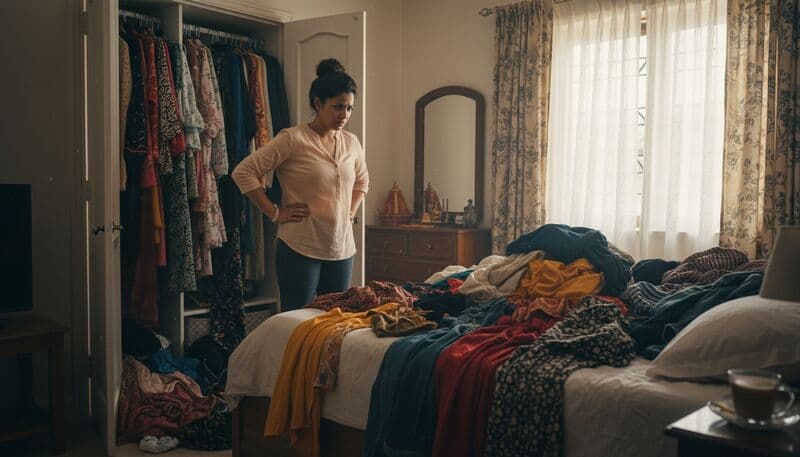
7 Signs Your Wardrobe Needs a Makeover
Full closet, nothing to wear? You're not alone. Here's how to spot the 7 warning signs and what to do about it.
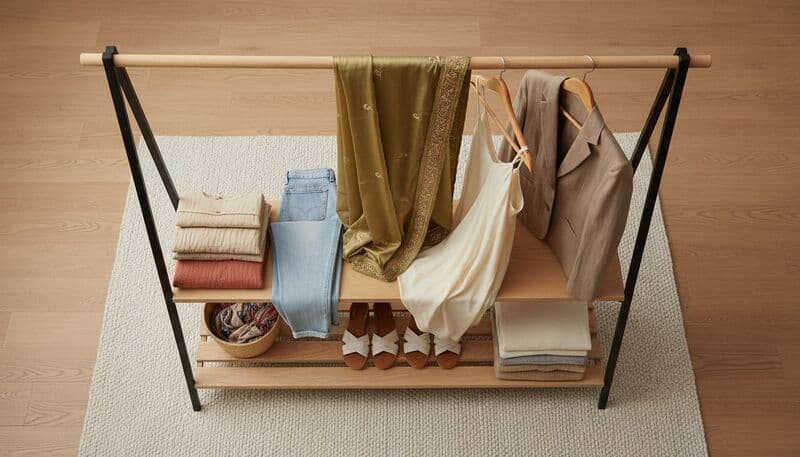
How to Build a Capsule Wardrobe — Under ₹5,000
12 pieces. 50+ outfits. Under ₹5,000. The complete guide to building a wardrobe that actually works.
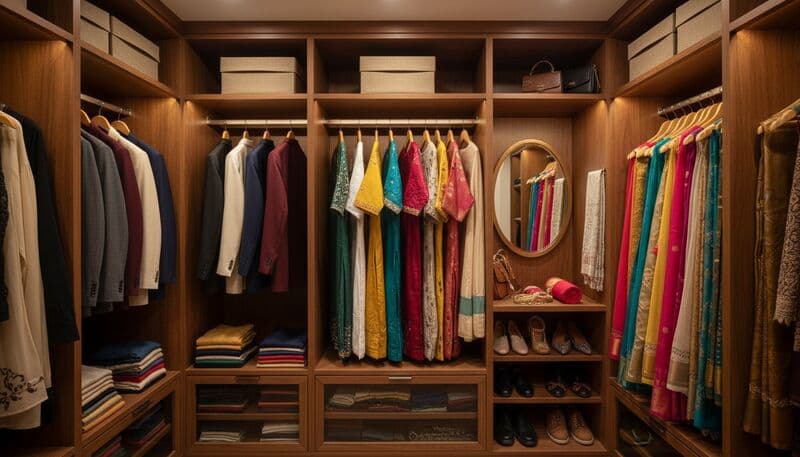
20 Wardrobe Essentials Every Working Indian Woman Needs
20 pieces. 50+ outfits. One wardrobe that works from boardroom to Zoom call to Friday brunch.